
Your Body Isn't Broken — It's Out of Balance.
If you've been through unexplained infertility, failed IVF
cycles, or irregular cycles — your body is sending signals. We know how to read them.
15+
Years treating pain
2,500+
Patients treated
95%+
Report significant improvement

— WHAT'S THE PROBLEM?
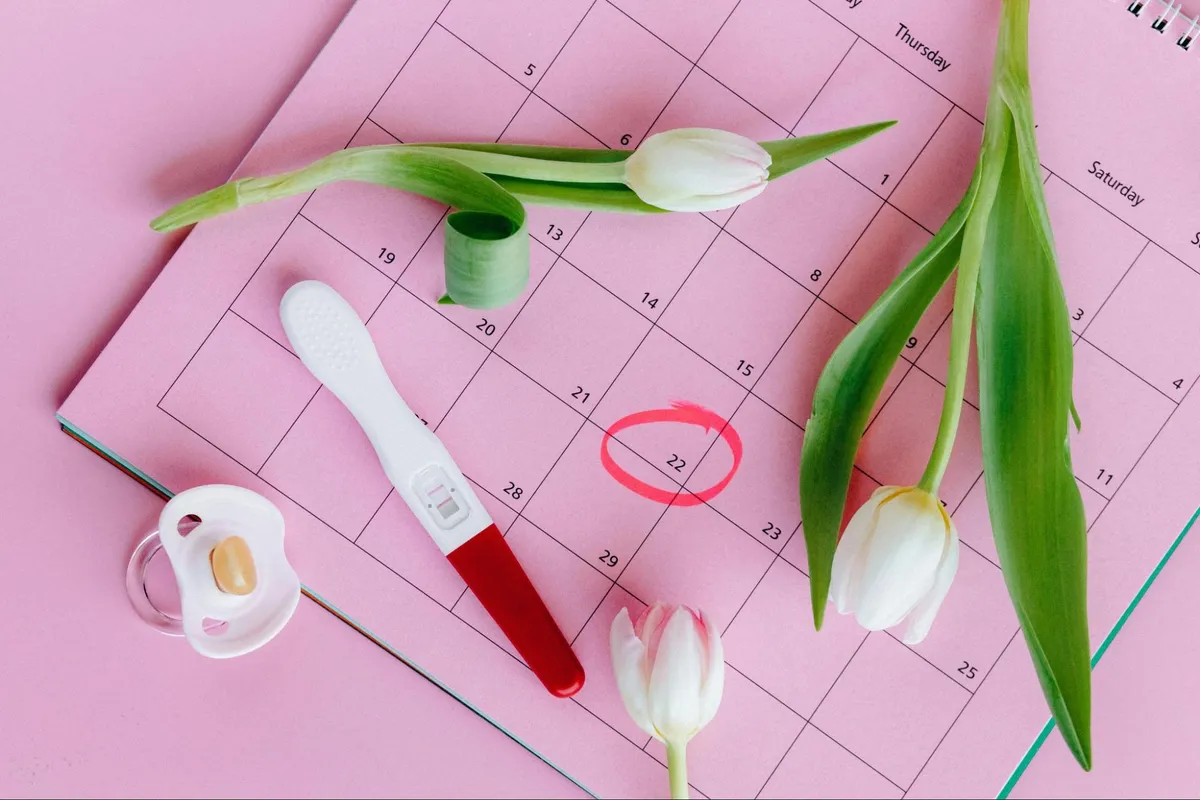
Understanding Fertility Acupuncture
You've done everything "right." You've tracked your cycle, optimized your diet, taken the supplements. Maybe you've even done one or two rounds of IVF. And yet — here you are, still searching. That's not failure. That's your body asking for a deeper kind of attention.
At OPA Wellness, we don't just treat symptoms. We use tongue diagnosis, cycle analysis, and targeted acupuncture protocols to find exactly where your system is dysregulated — and reset it from the inside out.
— HOW IT WORKS
Fertility Acupuncture
Click on each section to read more.
How fertility Acupuncture actually works — and what it does inside your body
Our licensed acupuncturists will take the time to listen to your story, understand your medical history, and assess your individual needs.
What does an "Ideal" Fertility Cycle actually look like? And where is yours falling short?
Research shows acupuncture before and after embryo transfer can significantly improve implantation rates. Here's how we make that happen — on your timeline.
Whether you are focusing on improving egg quality, supporting the uterine lining, or managing the stress of the stimulation phase, understanding your unique path is the foundation for our collaborative approach.
From a Traditional Chinese Medicine (TCM) perspective, fertility depends on both hormonal balance and internal warmth.
Many fertility evaluations rely on bloodwork, imaging, and timelines. These tools are valuable—but they don’t always explain why conception still isn’t happening.
Because every fertility journey is unique, our pricing reflects the specific frequency and specialized care required to reach your goals.
— WHY ON POINT FOR FERTILITY SUPPORT
Fertility Support at On Point
Fertility care is one of the most personal journeys a person can undertake. The clinic you choose matters — not just for the treatment, but for the precision, the communication, and the clinical depth behind every decision.
Here is what makes On Point different.
Precision diagnosis from session one
Every fertility patient receives a full 90-minute initial consultation. Tongue diagnosis, BBT analysis, and full cycle history are assessed before a single needle is placed. The pattern driving your fertility picture is identified first. Treatment follows from that.
TCM and Western medicine together
We coordinate with your reproductive endocrinologist, work within your IVF or IUI timeline, and provide protocol documentation when your medical team requests it. We work alongside your care team — never in conflict with it.
Cycle-phase aware care — every session
What your body needs on day 7 is different from day 21. Every session is timed and calibrated to your specific cycle phase — because a protocol that ignores cycle timing is leaving your most leverageable variable untreated.
Herbal medicine between sessions
Acupuncture is a few hours per week. The right herbal formula is twenty-four hours a day. Every fertility patient who would benefit receives a phase-specific prescription that extends treatment around the clock.
Honest timelines. Real expectations.
We don't promise conception. We promise a precise, evidence-informed protocol — and an honest conversation about what your pattern requires and what a realistic timeline looks like.

— OUR APPROACH
We don't just treat fertility. We teach you to understand it.
Every patient leaves knowing more about their body than when they arrived. Tongue diagnosis, breathing, hydration, lifestyle, TCM dietary guidance — the foundation that makes results last.
Tongue diagnosis — your body's real-time dashboard
Nervous system regulation through breathing
Hydration strategies that directly affect pain levels
TCM dietary guidance for inflammation reduction
Lifestyle habits that extend results between sessions
— BENEFITS OF FERTILITY ACUPUNCTURE
Benefits Of Fertility Acupuncture
Fertility acupuncture isn't a complement to your reproductive care — it's a direct intervention on the physiological systems that determine whether conception happens. The mechanism is specific, the evidence is established, and the outcomes are measurable in your cycle, your lab values, and your body's daily signals.
Most fertility challenges don't originate in the reproductive organs themselves. They originate upstream — in the hormonal signaling axis, the circulatory environment feeding the uterus and ovaries, the stress response chronically suppressing ovulation, and the nutritive quality of the blood nourishing developing follicles. Acupuncture addresses all four simultaneously. That's what makes it different from any single pharmaceutical intervention, and why it works in concert with IVF protocols rather than in competition with them.
What Fertility Acupuncture Actually Does:
Regulates the HPO axis
Suppresses cortisol
Increases uterine blood flow
Improves egg quality
Regulates cycle parameters
Supports herbal medicine integration

FAQ's
How long does it take for fertility acupuncture to work?
The honest answer depends on what's being treated. Cycle regulation in a relatively healthy system often shows measurable improvement within two to three cycles. Egg quality optimization requires at least 90 days of consistent treatment — because that's how long the follicle development window is. For patients supporting IVF, starting three months before retrieval produces the best outcomes. Starting two weeks before transfer produces some benefit but misses the majority of the opportunity.
Is there research supporting acupuncture for fertility?
Yes. The research base includes randomized controlled trials on acupuncture's effects on IVF implantation rates, ovarian blood flow, HPO axis regulation, and cortisol reduction. The evidence is strongest for IVF support, PCOS, and cycle regulation. It is not uniformly positive across all study designs — but the mechanistic evidence is well established and directly relevant to fertility.
Can acupuncture help if I have no diagnosis — just "unexplained infertility"?
This is one of our most common and most successfully treated presentations. "Unexplained" in conventional medicine means standard testing found nothing outside reference ranges. TCM diagnostics frequently identify subtle patterns — Liver Qi stagnation, mild Blood deficiency, Kidney Yang deficiency — that fall below the threshold of a clinical diagnosis but are more than sufficient to impair fertility. Treating these patterns produces measurable cycle improvements and, consistently, conception in patients who had been told nothing was wrong.
— WHAT TO EXPECT
What to Expect with Fertility Acupuncture
Your first fertility visit at On Point is not a brief intake with a treatment tacked on at the end. It is a 90-minute diagnostic and treatment session designed to identify the specific pattern driving your fertility picture — and begin addressing it in the same appointment.
Most patients tell us it's the first time anyone has looked at the full picture rather than a single lab value or a single organ system. That's the point.
Your first visit — what happens:
1. Comprehensive intake
We review your full cycle history, reproductive history, hormone patterns, sleep quality, stress load, energy, digestion, and emotional wellbeing. Fertility reflects your entire system — not just your ovaries. The intake covers all of it.
2. TCM diagnostic assessment
Tongue diagnosis reveals what lab values don't capture: circulation quality, Blood deficiency, Kidney deficiency, Liver Qi stagnation, Heat or Cold patterns in the reproductive system. These are real physiological signals — just read through a different diagnostic lens. Your tongue changes with treatment, making it a real-time progress tracker across your entire course of care.
3. Your first treatment
The intake informs the treatment. Needles are placed based on what the diagnostic assessment reveals — not a generic fertility protocol applied to every patient. Most patients describe their first session as profoundly relaxing. Many fall asleep on the table.
4. Your personalized care plan
You leave with a clear protocol: treatment frequency, phase-specific timing recommendations, herbal medicine if indicated, and an honest timeline based on your specific presentation. No vague "we'll see how it goes." A real plan.
FAQ's
Do I need to bring anything to my first visit?
Bring any recent lab work, cycle tracking data (including BBT charts if you keep them), and a list of any medications or supplements you're currently taking. If you've had prior fertility evaluations or procedures, bring those records if available. The more clinical context you can provide, the more precise the initial protocol will be.
Is acupuncture painful?
Fertility acupuncture uses fine, hair-thin needles — significantly smaller than the needles used for blood draws or injections. Most patients feel a brief sensation at needle insertion followed by a deep heaviness or warmth at the point — both of which are normal and therapeutic responses. The majority of patients are deeply relaxed within minutes of needle placement, and many fall asleep. It is not the experience most people anticipate from the word "needle."
How often do I need to come in?
For active fertility treatment, we typically recommend once or twice per week depending on your cycle phase, where you are in your fertility journey, and whether you are supporting an IVF cycle. Consistency matters more for fertility than for almost any other condition we treat — the hormonal and circulatory changes acupuncture produces are cumulative and require sustained input to hold and build.
— THE TCM IDEAL FERTILITY PERIOD
The TCM Ideal Fertility Period
Most women have been told their cycle is normal. What that actually means is: it's common. Common and optimal are not the same thing — and the gap between the two is often exactly where fertility challenges live.
The Ideal Fertility Period is the clinical benchmark we use to assess true reproductive health. It gives us a precise, measurable target — not a range of acceptable variation, but a specific picture of what a fully optimized cycle looks like. Every marker that falls short is a data point and a treatment target.
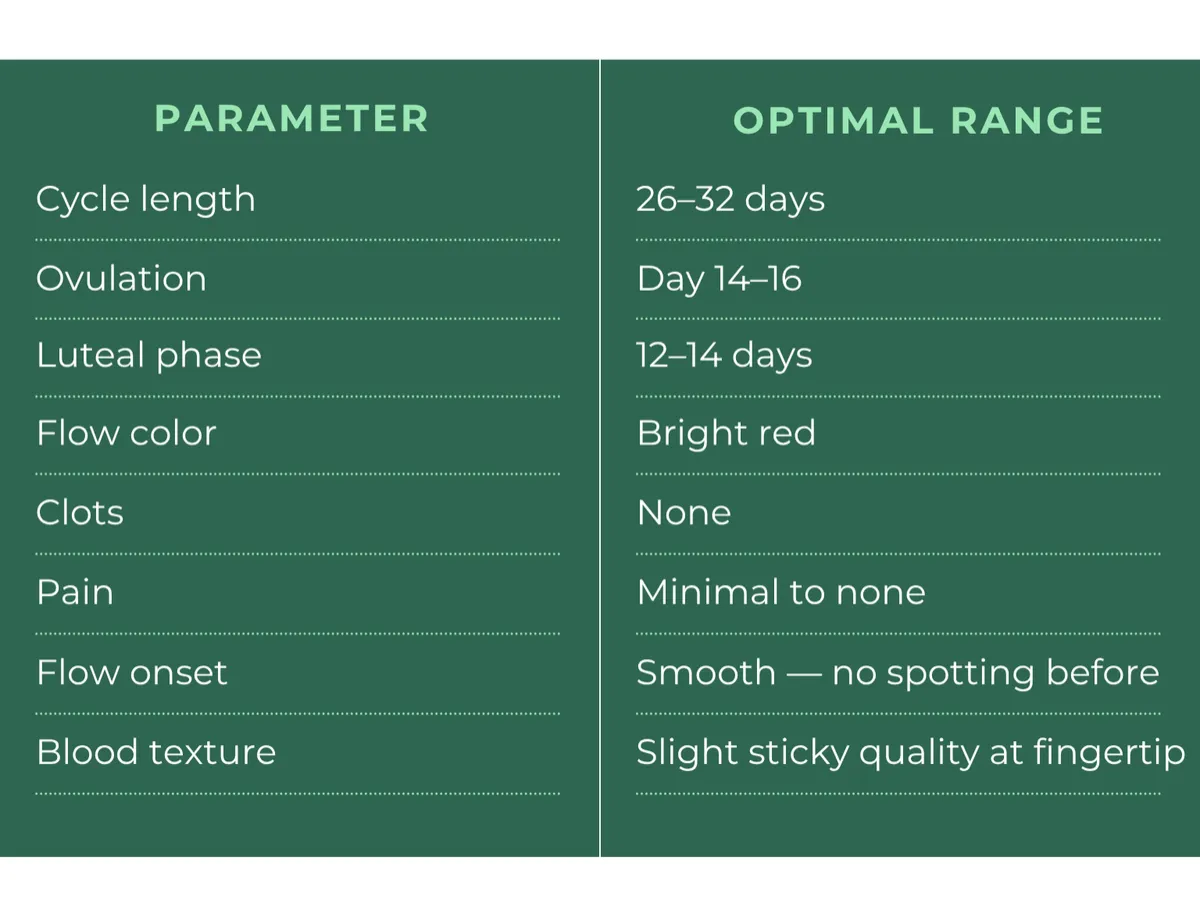
Why each marker matters:
Cycle length
A 26–32 day cycle indicates balanced follicular development and adequate luteal support. Cycles shorter than 26 days often reflect accelerated follicular maturation and reduced egg quality. Cycles longer than 32 days typically indicate delayed or absent ovulation.
Ovulation timing
Ovulation on day 14–16 provides adequate follicular development time and a sufficient luteal phase for implantation. Early ovulation compresses egg maturation. Late ovulation shortens the luteal phase.
Luteal phase length
The luteal phase must be 12–14 days for a fertilized egg to implant and establish successfully. A luteal phase shorter than 10 days — even with confirmed ovulation — is often the sole reason conception is not occurring. This is one of the most treatable parameters in our practice.
Flow color and quality
Bright red blood indicates healthy, well-circulated Blood reaching the uterine lining. Dark, brown, or purple blood indicates stagnation. Pale blood indicates deficiency. Both are treatable patterns — and both are invisible to standard lab panels.
Blood texture
The slight sticky quality of healthy menstrual blood at fingertip indicates nutrient-dense, well-nourished Blood — the TCM equivalent of optimal endometrial quality. This is a menstrual blood distinction, not cervical mucus. It is a precision clinical signal that most practitioners never assess.
Spotting before menstruation
Pre-menstrual spotting indicates insufficient progesterone in the late luteal phase — a direct implantation barrier that is consistently addressed through luteal phase acupuncture and herbal support.
How many of these markers are you hitting? If fewer than five, your cycle is communicating something specific — and specific means treatable. The Ideal Fertility Period framework is how we turn "nothing is technically wrong" into a precise treatment target.
FAQ's
My doctor says my cycle is normal. Why does the Ideal Fertility Period show otherwise?
Conventional reference ranges for cycle parameters are based on population averages — meaning "normal" reflects what is common, not what is optimal for conception. A 35-day cycle, a 9-day luteal phase, and spotting before your period may all fall within reference ranges while collectively creating a hostile environment for implantation. The Ideal Fertility Period holds a higher standard — because conception requires more than normal. It requires optimal.
Can my cycle actually change with acupuncture?
Yes — and this is one of the most consistently observable outcomes in our practice. Cycle length regularizes, luteal phases lengthen, flow color brightens, pre-menstrual spotting resolves, and pain reduces across a treatment arc. These are not subjective impressions — they are measurable changes in the cycle parameters that directly govern fertility. Most patients begin noticing shifts within two to three cycles of consistent treatment.
What if I'm not tracking my cycle?
We recommend starting immediately — even a simple calendar record of cycle start and end dates, plus a description of flow quality, gives us meaningful data to work with. BBT charting adds ovulation timing confirmation and luteal phase assessment. We walk you through this at your first visit and provide tracking guidance if you haven't done it before.
— IVF & IUI SUPPORT
IVF & IUI Support
The research is clear: acupuncture before and after embryo transfer significantly improves implantation rates.
What most patients don't know is that the transfer itself is the last and least leverageable step. The real opportunity is in the 90 days before retrieval — when the eggs being transferred are still maturing, and the environment they develop in is still shapeable.
We don't just help your transfer day. We improve the soil before the seed is planted.
The IVF & IUI support protocol:
The 90-day window — egg quality optimization
Eggs take approximately 90 days to mature from primordial follicle to ovulation-ready oocyte. The circulatory, hormonal, and inflammatory environment during that entire window directly influences egg quality, fertilization rates, and embryo viability. Starting acupuncture three months before retrieval is not early — it is the protocol that produces the best outcomes. Starting two weeks before transfer produces some benefit at the uterine level but misses the majority of the opportunity.Stimulation phase support
During ovarian stimulation, acupuncture supports follicular blood flow, reduces the side effects of stimulation medications (bloating, mood disturbance, sleep disruption), and maintains nervous system regulation during one of the most physically and emotionally demanding phases of the IVF process.Pre- and post-transfer protocol
Sessions in the 24 hours before and after embryo transfer are timed specifically to maximize uterine blood flow, reduce uterine contractility, and support the implantation window.
This is the most researched application of acupuncture in IVF — and it is available here, coordinated around your transfer schedule.
Failed transfer recovery
For patients who have experienced one or more failed transfers, acupuncture addresses the specific pattern that the transfer failed in: thin or poorly perfused lining, elevated uterine contractility, immune dysregulation, or the cumulative physical and emotional depletion of repeated cycles. We treat the pattern — not just the outcome.IUI support
For IUI patients, the same principles apply on a compressed timeline: optimizing uterine blood flow, supporting ovulation quality, and managing the stress response in the two-week wait. Acupuncture in the 24 hours before and after IUI has research support for improving outcomes.Electroacupuncture contraindication
Electroacupuncture is not used following an IVF embryo transfer or during confirmed pregnancy. All protocols are fully adapted to your specific phase and procedure timeline.
FAQ's
My RE hasn't mentioned acupuncture. Should I tell them I'm doing it?
Yes — always keep your reproductive endocrinologist informed of any complementary care. Most REs are supportive of acupuncture as an adjunct to IVF. We are comfortable coordinating directly with your RE's office and can provide documentation of our protocol if requested. We work alongside your medical team — never in conflict with it.
I only have two weeks before my transfer. Is it too late to start?
It's not too late — but it's the least leveraged entry point. Pre-transfer acupuncture still supports uterine blood flow and nervous system regulation at the time of transfer. What it cannot do in two weeks is optimize the egg quality and endometrial environment that developed over the preceding three months. Start now, and plan for the next cycle to be fully supported from the beginning.
Can acupuncture help after a miscarriage?
Yes. Post-miscarriage care addresses both the physical recovery — restoring uterine circulation, clearing residual stagnation, rebuilding Blood and Kidney Jing depleted by pregnancy loss — and the nervous system regulation that grief and trauma disrupt. We typically recommend waiting until after the first full post-miscarriage cycle before resuming active fertility treatment, though supportive care can begin immediately.
— COMMON CONDITIONS
Common Conditions
Fertility challenges are rarely one-dimensional. PCOS, endometriosis, diminished ovarian reserve, and unexplained infertility each have distinct physiological patterns — and distinct acupuncture strategies. What works for a PCOS patient with elevated androgens and anovulation is different from what works for an endometriosis patient with pelvic adhesions and immune dysregulation. Generic treatment produces generic results. Pattern-specific treatment produces the outcomes that matter.
PCOS & Ovulation Support
Disrupts LH/FSH signaling, elevates androgens, impairs insulin sensitivity, and produces anovulatory cycles
Acupuncture supports ovulation induction, improves insulin sensitivity, and reduces elevated LH and testosterone
Regulates cycle consistency that PCOS disrupts
Many patients begin ovulating regularly within two to three cycles of consistent treatment
Endometriosis & Pelvic Circulation
Creates pelvic inflammation, adhesions, and impaired circulation to the uterine lining — directly compromising implantation
Acupuncture reduces inflammatory burden and improves pelvic blood flow
Modulates the immune dysregulation that drives ectopic tissue growth
Addresses the pain patterns that compound the condition month over month
Diminished Ovarian Reserve
Ovarian reserve reflects Kidney Jing in TCM — the deep constitutional energy governing reproductive capacity
Acupuncture can improve the quality of eggs that remain
Targeted herbal medicine nourishes Kidney Jing and optimizes the environment eggs mature in
Many DOR patients achieve successful conception with a sustained, correctly prescribed protocol
Unexplained Infertility
"Unexplained" means standard testing found nothing outside reference ranges — not that nothing is wrong
TCM diagnostics frequently identify Liver Qi stagnation, Blood deficiency, Kidney Yang deficiency, or luteal phase insufficiency
These patterns fall below the threshold of clinical diagnosis but are more than sufficient to impair fertility
Treating them produces measurable cycle improvements consistently
Recurrent Pregnancy Loss
Most commonly reflects inadequate luteal phase support, immune dysregulation, or poor uterine circulation
Kidney deficiency patterns compromise early embryo development in ways standard testing rarely identifies
Acupuncture rebuilds the internal environment before the next attempt
Addresses both the physical mechanisms and the emotional weight of repeated loss
Hormonal Imbalances
Elevated prolactin, low progesterone, disrupted FSH/LH ratio, thyroid irregularities affecting fertility
All reflect upstream hormonal dysregulation addressable through HPO and HPA axis modulation
Acupuncture corrects the signal at the source — not just the downstream hormonal numbers
Herbal medicine supports hormonal regulation between sessions around the clock
FAQ's
I have PCOS but I am ovulating. Do I still need fertility acupuncture?
Ovulating with PCOS is a positive sign — but ovulation alone doesn't guarantee egg quality, luteal phase adequacy, or the endometrial environment required for implantation. Many PCOS patients who ovulate still have suboptimal cycle parameters that impair fertility. Acupuncture addresses the full picture — not just whether ovulation is occurring, but the quality of the cycle around it.
Can acupuncture help with endometriosis pain as well as fertility?
Yes — and the two are related. The inflammatory and circulatory mechanisms driving endometriosis pain are the same ones impairing fertility. Treating the root pattern improves both simultaneously. Most endometriosis patients report meaningful pain reduction alongside improved cycle parameters over a sustained course of care.
My AMH is very low. Is it worth trying acupuncture?
AMH is a marker of ovarian reserve quantity — not quality. Quality is influenced by the circulatory and hormonal environment follicles develop in, and that is directly addressable. Many patients with low AMH achieve successful conception with consistent acupuncture and targeted herbal medicine. The earlier treatment begins, the more development cycles are optimized before retrieval or timed conception.
— HORMONES, TEMPERATURE & FERTILITY
Hormones, Temperature & Fertility
Fertility in TCM is not only a hormonal equation. It is a thermal one. The uterus must be warm, nourished, and well-circulated to support implantation and early development — and the difference between a receptive uterine environment and an inhospitable one is often a matter of metabolic warmth and circulatory quality that standard panels never measure.
We often describe it this way: a bun rises in a warm oven. A cold oven produces nothing — regardless of how good the ingredients are.
The Hormonal and Thermal Framework:
- Yin and Yang balance across the cycle
The body must be restored and nourished at night (Yin) and warmed, activated, and metabolically energized during the day (Yang). When this rhythm is disrupted — presenting as cold extremities, low basal body temperature, daytime fatigue, and restless heat at night — reproductive function is directly compromised. This pattern is common, identifiable through tongue and BBT assessment, and highly responsive to treatment.
- HPA axis and cortisol regulation
The stress-fertility connection is physiological, not psychological. Chronic cortisol elevation suppresses GnRH pulsatility, disrupts LH surge timing, and impairs progesterone production in the luteal phase. Acupuncture's direct modulation of the HPA axis reduces the cortisol burden that stress imposes on the reproductive system — restoring the hormonal rhythm that chronic stress suppresses.
- Uterine warming — moxibustion
Moxibustion (the burning of dried mugwort near specific acupuncture points) is one of our primary tools for restoring uterine warmth and circulation in cold-pattern presentations. Applied to points governing uterine circulation and Kidney Yang, moxa directly addresses the thermal deficiency that conventional medicine has no equivalent tool for.

- Basal body temperature as diagnostic data
A 30-day BBT chart reveals the hormonal architecture of your cycle in ways that single-point bloodwork cannot. A flat post-ovulatory thermal rise indicates insufficient progesterone. A slow or gradual rise indicates delayed corpus luteum function. A premature drop in the luteal phase predicts the spotting and short luteal phase that prevents implantation. These are actionable findings — and they change with treatment.
- Herbal medicine for hormonal support
Phase-specific herbal formulas prescribed alongside acupuncture address the hormonal picture around the clock between sessions. Follicular phase formulas nourish Yin and Blood to support follicular maturation. Ovulatory phase formulas move Qi and Blood to support the LH surge and egg release. Luteal phase formulas warm Yang and nourish the uterine lining to support implantation. The right formula at the right phase doubles the effective treatment frequency without adding sessions.
FAQ's
I always feel cold — cold hands, cold feet, cold all the time. Is that related to fertility?
In TCM, yes — and significantly. Systemic cold presentation indicates Kidney Yang deficiency, which directly governs reproductive warmth and uterine circulation. This pattern is one of the most common underlying drivers of luteal phase deficiency, low basal body temperature, and the cold uterine environment that impairs implantation. It is also one of the most responsive patterns to moxa, targeted herbal medicine, and Yang-tonifying acupuncture protocols.
My hormones tested normal but my cycle doesn't feel right. What does TCM say about that?
TCM operates on a foundational principle: function changes before lab values do. The patterns we identify through tongue diagnosis, pulse assessment, BBT tracking, and menstrual presentation often precede the hormonal abnormalities that eventually show up on bloodwork. Treating these early functional patterns — before they become clinical findings — is where acupuncture produces its most significant outcomes.
Do I need to track BBT before starting?
No — but starting as soon as possible gives us better data faster. A single month of BBT tracking before your first visit provides meaningful diagnostic information. If you haven't tracked before, we provide guidance at your first visit and begin reading the pattern from your next cycle onward.
— FERTILITY DIAGNOSTICS
Fertility Diagnostics
Standard fertility evaluations are built around what laboratories can measure. TCM diagnostics are built around what the body expresses in real time — and the two perspectives together produce a far more complete clinical picture than either delivers alone.
The most important diagnostic insight in TCM is this: function changes before lab values do. By the time a hormonal irregularity appears on bloodwork, the physiological pattern driving it has typically been present for months. TCM diagnostics read that earlier signal — allowing us to identify and address imbalances before they become the clinical findings that trigger a diagnosis.
The Three Diagnostic Signals We Assess:
Tongue Observation
The tongue is a real-time map of your internal landscape. Color reflects Blood quality and circulation. Coating reflects the state of your digestive and metabolic function. Moisture indicates fluid metabolism. Shape reveals constitutional tendencies. A pale, thin tongue tells a different fertility story than a red, cracked tongue — or a purple, stagnant one. Each pattern maps directly to a treatment strategy. Your tongue changes with treatment — making it a progress tracker across your entire course of care, not just a one-time snapshot.
Basal Body Temperature Patterns
A 30-day BBT chart is one of the most information-dense fertility diagnostics available — and it costs nothing. It reveals ovulation timing, luteal phase length and quality, the strength of the post-ovulatory thermal shift, and the presence of patterns that day-3 and day-21 bloodwork routinely miss. A sluggish post-ovulatory rise, a luteal phase that drops on day 9, or a monophasic chart with no clear thermal shift — each is a specific, treatable finding.
Menstrual Presentation
The color, texture, volume, timing, and pain pattern of menstrual blood are direct clinical signals about the quality of uterine circulation and Blood nourishment. Dark, clotted blood indicates stagnation. Pale, watery blood indicates deficiency. Pre-menstrual spotting indicates luteal insufficiency. Pain indicates Qi and Blood obstruction. These are diagnostic data that most practitioners never systematically assess.
FAQ's
Can tongue diagnosis really tell you something about fertility?
Yes — and this surprises most patients until they understand the mechanism. In TCM, specific regions of the tongue correspond to specific organ systems. The root of the tongue reflects Kidney function — the system governing reproductive reserve and uterine warmth. The center reflects Spleen and digestive function — directly related to Blood quality and nutrient delivery to developing follicles. These are consistent diagnostic correspondences with thousands of years of clinical validation and a growing body of modern physiological research.
Do I need to track BBT with a special thermometer?
A basal body thermometer — available at any pharmacy for under $15 — measures to two decimal places, which is necessary for accurate pattern reading. Regular oral thermometers are not precise enough. Take your temperature at the same time every morning before getting out of bed, speaking, or drinking anything. Consistency in timing matters more than which thermometer you use.
What if my menstrual blood has always been dark or clotted — is that something that can actually change?
Yes — and this is one of the most consistently observable treatment outcomes in our practice. Dark, clotted blood reflects Blood stagnation in TCM — impaired uterine circulation that is directly addressed through acupuncture, cupping, and targeted herbal medicine. Most patients see flow color brighten and clots reduce within two to three cycles of consistent treatment. This reflects a genuine change in uterine circulatory quality.
— COST & PACKAGES
Cost & Packages
Fertility treatment requires sustained frequency — and our pricing reflects the biological reality that consistency compounds results. The internal changes acupuncture produces are cumulative. Sporadic treatment produces sporadic results. A committed course of care produces the hormonal, circulatory, and cycle changes that translate into the outcome you're working toward.
Package options
Fertility treatment is most effective — and most accessible — when committed to as a course of care rather than individual sessions. Package options are structured to support the treatment frequency and duration that produces real outcomes. Specific pricing and package details are discussed at your first visit, where Kalpesh can give you a realistic recommendation based on your specific presentation and goals.
Insurance
Fertility acupuncture is not typically covered by insurance as a fertility treatment. However, many patients present with chronic pain conditions alongside their fertility goals — including pelvic pain, hormonal headaches, cycle pain, and back pain — which may qualify for coverage under our BCBS and UHC/UMR contracts. Our team reviews your specific benefits at or before your first visit and identifies every coverage pathway available to you.
What you are investing in
The investment into fertility acupuncture is a fraction of a single IVF cycle — and its purpose is to improve the conditions that determine whether that cycle succeeds. Patients who view acupuncture as part of their fertility investment rather than an add-on consistently commit at the frequency the biology requires. Those are the patients who get the outcomes.
FAQ's
How many sessions will I need?
For natural conception support, a minimum of three months of consistent treatment is the standard recommendation — aligned with the 90-day follicle development window. For IVF support starting from retrieval prep, the same timeline applies. For patients already mid-cycle or close to transfer, we build the most effective protocol possible within your timeline and discuss realistic expectations at your first visit.
Is fertility acupuncture covered by HSA or FSA?
Yes. Acupuncture is an HSA and FSA-eligible expense. This is one of the most practical ways to offset the cost of consistent fertility care — and many patients use their HSA or FSA balance specifically for this purpose. Confirm eligibility with your plan administrator if needed.
What if I'm also doing IVF — does that change the cost?
IVF-concurrent care follows the same session structure as standard fertility care. Transfer-day sessions — pre- and post-transfer — are individual appointments. The total investment depends on where you are in your IVF timeline and how many cycles you are supporting. Kalpesh reviews this with you at your first visit and builds a protocol that fits both your clinical needs and your schedule.
Your Follow-Up Care Structure
Clinical Check-In
Every visit begins with a brief update on your recent clinic results, medication adjustments, and physical symptoms to ensure our treatment remains perfectly aligned with your doctor's orders.
Adaptive Treatment
We adjust your acupuncture point selection each session to address specific goals, such as relieving stimulation medication discomfort or encouraging a receptive uterine environment
Nervous System Reset
The core of the session involves resting in a quiet, private room, allowing the body to shift into a parasympathetic state that promotes blood flow to the reproductive organs.
Strategic Scheduling
Before you leave, we review your upcoming calendar together to confirm that your next acupuncture sessions are always optimally placed for your specific retrieval or transfer dates.
F.A.Q.s
How does acupuncture specifically help with PCOS?
PCOS support with acupuncture:
- Improves insulin sensitivity and hormone balance
- Helps lower androgens
- Supports healthy brain–ovary communication
- Encourages regular ovulation and better egg quality
Designed to bring PCOS back toward balance.
Can acupuncture improve sperm quality if the issue is genetic?
While genetics themselves cannot be altered, acupuncture can profoundly influence the biological environment surrounding sperm development.
- Improves blood flow and reduces oxidative stress
- Supports DNA integrity, motility, and morphology
- Promotes the healthiest possible sperm production
Focused on maximizing what can be improved.
Is acupuncture effective for the pelvic pain associated with endometriosis?
Yes. Acupuncture can be very effective for reducing endometriosis-related pain.
Treatment helps to:
- Encourage healthy pelvic circulation
- Trigger natural endorphin-based pain relief
- Reduce inflammation and cramping
- Promote a calmer, more receptive pelvic environment
Relief that supports both comfort and fertility goals.
Do both partners need to come in for treatment?
While treatment can certainly begin with one partner, the greatest benefit is often seen when both individuals are supported together.
- Best results often come from treating both partners
- Sperm provides 50% of genetic material
- Supporting egg and sperm builds a stronger start for pregnancy
Because fertility is truly a shared journey.
Serving Southlake, TX, and Beyond
Conveniently located in Southlake, TX, our clinic serves as a premier destination for specialized IVF and IUI support locally and throughout the DFW area. Our hours are designed to accommodate the time-sensitive nature of fertility cycles, making it easy to prioritize your well-being and clinical requirements.
Book Fertility-Supportive Care in Southlake Now
Ready to optimize your body and calm your mind? Visit our serene Southlake clinic for specialized therapy that transcends ordinary relaxation to support your path to parenthood.
Contact us today for a consultation or book an appointment now and take the first step toward your fertility goals. Let us help you find your balance and bring your dreams to life.

2500+
Patients Helped Over The Years

15+
Years of Hands On Experience

100+
5 Stars Google Reviews
FOLLOW US


LINKS
CONTACT US
PHONE: (972) 863-2895
EMAIL: info@opawellness.com
WE ACCEPT INSURANCE
Copyright 2026. On Point Acupuncture & Wellness.
All Rights Reserved.