
Performance Medicine for Athletes
Whether you're recovering from injury, breaking through a performance plateau, or staying ahead of the breakdown that comes with consistent training — this is the hub where acupuncture and Traditional Chinese Medicine meet athletic performance.
15+
Years treating pain
2,500+
Patients treated
95%+
Report significant improvement
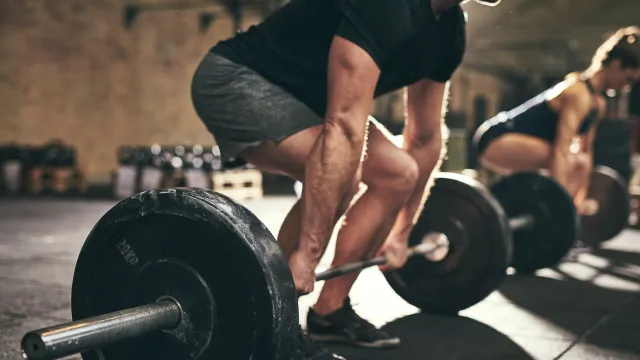
— CONDITIONS WE TREAT
If pain is limiting your life, we've treated it.
Click any condition for a full explanation of how we address it.
Strains, sprains, pulls, and impact injuries. Acupuncture compresses the repair timeline so you're rebuilding, not just waiting.
The injury that never fully heals. Electroacupuncture targets collagen synthesis directly — producing the tissue repair that rest alone cannot.
Impingement, partial tears, post-surgical rehab. We restore circulation, reduce inflammation, and release the patterns overloading the cuff.
IT band and patellofemoral pain both originate upstream of the knee. We treat the full kinetic chain — not just where it hurts.
The most re-injured muscle groups in sport. Electroacupuncture closes the gap between "feels okay" and actually healed.
Not injured — chasing the edge. Regular acupuncture improves recovery speed, sleep quality, and the internal environment your adaptation depends on.
Consistent sessions keep inflammation suppressed and small dysfunctions from becoming the injuries that cost you weeks.
Acupuncture manages post-op inflammation, restores neural drive to inhibited muscles, and compresses recovery timelines beyond what PT alone achieves.
— WHY ON POINT
Why On Point for Athletic Performance & Recovery
Every athlete gets injured. Every athlete needs to recover. What separates the ones who come back stronger from the ones who manage the same problem year after year is the quality of the environment their recovery happens in — and the precision of the intervention driving it.
Here is what makes On Point different.
Performance medicine — not wellness acupuncture
The acupuncture applied to a competitive athlete's rotator cuff is not the same as the acupuncture applied for general relaxation. Point selection, needle depth, electroacupuncture frequency, and session sequencing are all calibrated to the specific tissue, the specific injury, and the specific training load you're managing. Generic protocols produce generic results. Precision produces outcomes.
Built for Performance
Acupuncture resets your nervous system and improves blood flow, so you recover faster, move freely, and get more quality training days. That’s how Personal Records get broken, and how you stay healthy season after season.
Recovery gets you back. Consistency moves you forward.
Multiple modalities can be layered in one session
Acupuncture, electroacupuncture, cupping, gua sha, and coordinated massage work — can all be layered in a single session around your specific presentation. You don't need four different appointments with four different providers. You need one session built around what your tissue actually requires.
Schedule-aware treatment
We build your protocol around your competition and training calendar — not the other way around. Heavy stimulation before a game day is never appropriate. A pre-competition nervous system priming session 24–48 hours out is. Treatment intensity is always adjusted to where you are in your season.
Recovery that compounds
One session produces relief. Consistent sessions produce a different athlete. The circulatory quality, tissue resilience, and nervous system regulation that acupuncture builds over a sustained protocol changes your baseline — not just your pain level.
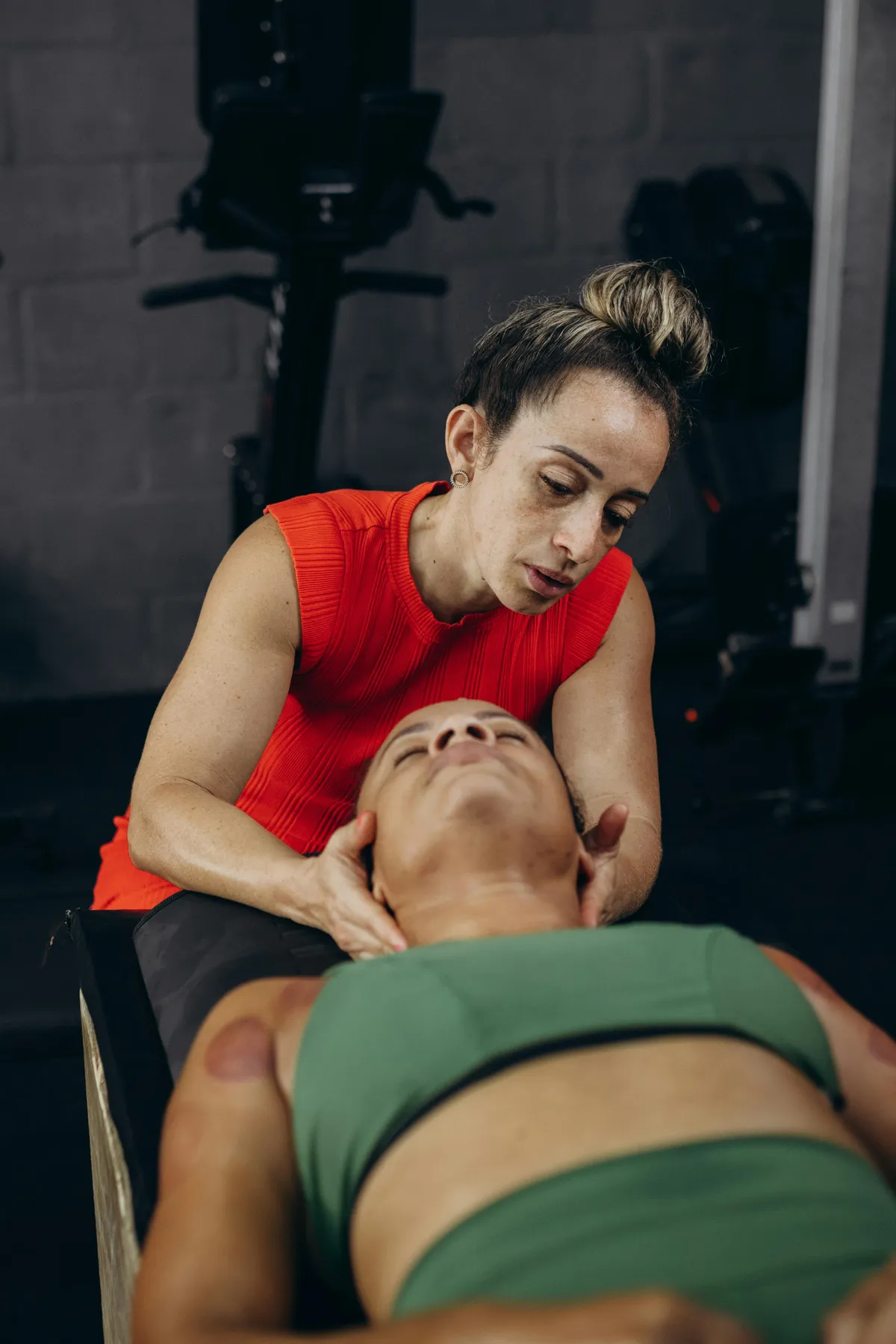
— OUR APPROACH
We don’t just treat injuries. We help you outperform them.
Every athlete leaves knowing more about how their body recovers than when they arrived. Tongue diagnosis, breathing, hydration, mobility, and training-load guidance: the foundation that keeps you strong and in the game.
Tongue diagnosis — your body's real-time dashboard
Nervous system regulation through breathing
Hydration strategies that directly affect pain levels
TCM dietary guidance for inflammation reduction
Lifestyle habits that extend results between sessions
— SPORTS INJURIES AND SPRAINS
Sports Injuries & Acute Recovery
Acute sports injuries — sprains, strains, muscle tears, impact injuries — create a predictable physiological cascade: inflammation, protective muscular guarding, circulatory restriction to the injured tissue, and a nervous system that upregulates pain to enforce rest. That cascade is functional in the first 24–72 hours. After that, it becomes the thing preventing you from healing.
Acupuncture interrupts the pathological phase of that cascade. By driving anti-inflammatory signaling, restoring circulation to injured tissue, and downregulating the nervous system's protective pain response, it accelerates the tissue repair timeline in a way that passive rest cannot.
What we treat:
Ankle sprains and ligament injuries — Muscle strains (grade I and II) — AC joint sprains — Wrist and hand injuries — Rib injuries — Impact bruising and soft tissue trauma — Groin pulls — Calf and Achilles injuries
How we treat it:
Acupuncture
Cupping Therapy
Deep Tissue & Sports Massage
Electroacupuncture (E-Stim)
Gua Sha
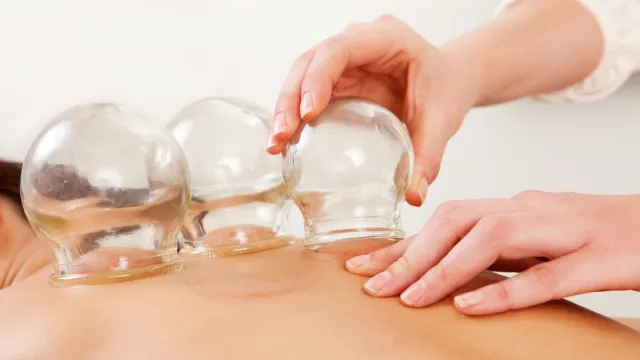
Most athletes return to modified training within three to five sessions for soft tissue injuries. Full return timelines depend on injury severity and training load — Kalpesh gives you an honest, specific projection after your first visit.
FAQ's
How soon after an injury can I start acupuncture?
Within 24–72 hours of most soft tissue injuries — provided the skin is intact and there is no fracture requiring immobilization. Early intervention is always better. Acupuncture in the acute phase reduces the inflammatory cascade before it becomes the thing slowing your recovery, not protecting it.
Can acupuncture help if I've been injured for months and it hasn't healed?
Yes — and this is one of our most common presentations. Chronic soft tissue injuries stall because the tissue environment stopped supporting repair, not because healing is impossible. Acupuncture restores the circulatory and anti-inflammatory conditions the tissue needs to complete what it started. Patients with injuries unresolved for months regularly achieve full recovery with a dedicated course of care.
Do I need to stop training while doing acupuncture for an injury?
Not necessarily. Modified training is almost always possible, and complete rest is rarely the optimal strategy for soft tissue injuries beyond the first few days. Kalpesh will give you specific load management guidance at your first visit based on your injury type and severity — including what to continue, what to modify, and what to avoid while tissue repair is active.
— TENDINOPATHY & OVERUSE
Tendinopathy & Overuse Injuries
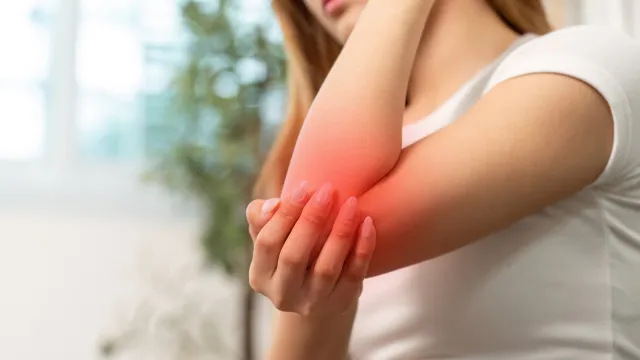
Tendinopathy is one of the most common and most undertreated conditions in athletic populations — and one of the most responsive to acupuncture when treated correctly. The reason most tendinopathies become chronic is straightforward: tendons have poor blood supply. Without consistent circulatory stimulus, the degenerated collagen tissue that accumulates in an overused tendon never fully remodels, and the tendon stays stuck in a pathological state that hurts with load and never quite heals between sessions.
Electroacupuncture applied to the peritendinous tissue solves this problem directly. It drives a sustained increase in local blood flow, activates the fibroblast activity responsible for collagen synthesis, and produces the tissue repair stimulus that the tendon cannot generate on its own under continued training load.
What we treat:
Patellar tendinopathy (jumper's knee) — Achilles tendinopathy — Rotator cuff tendinopathy — Hip flexor tendinopathy — Proximal hamstring tendinopathy — Gluteus medius tendinopathy — Tennis elbow (lateral epicondylitis) — Golfer's elbow (medial epicondylitis) — Wrist extensor tendinopathies
How we treat it:
Acupuncture
Cupping Therapy
Deep Tissue Massage
Electroacupuncture (E-Stim)
Gua Sha
Herbal Medicine
FAQ's
I've had patellar tendinopathy for two years. Is it too late for acupuncture to help?
No. Chronic tendinopathy is more entrenched than acute — the collagen matrix has had more time to accumulate pathological tissue — but the repair mechanism acupuncture targets doesn't have an expiration date. Electroacupuncture-driven collagen synthesis works on chronic tendinopathy the same way it works on acute cases, just over a longer treatment arc. Patients with years-long tendinopathy histories regularly return to full training loads with consistent treatment.
How is electroacupuncture different from regular needling for tendinopathy?
Manual needling stimulates the peritendinous tissue and initiates a local healing response. Electroacupuncture adds a sustained electrical current between needles that drives a significantly stronger collagen synthesis stimulus — activating fibroblast proliferation at a level that manual needling alone doesn't consistently achieve. For tendons with poor blood supply and established degeneration, e-stim is the mechanism that actually moves the needle on tissue repair.
Can I keep training through tendinopathy treatment?
Yes — with appropriate load management. Complete rest is rarely indicated and often counterproductive for tendinopathy, which requires progressive mechanical loading to remodel correctly. Kalpesh coordinates your acupuncture protocol with your training load — reducing stimulus in the tissue between sessions while acupuncture drives the repair response, then progressively reintroducing load as tissue capacity improves.
— ROTATOR CUFF & SHOULDER
Rotator Cuff & Shoulder Injuries
The overhead athlete's most vulnerable structure. Swimmers, baseball players, tennis players, CrossFit athletes, and anyone pressing or pulling heavy loads consistently are managing rotator cuff tissue on a knife's edge between adaptation and injury.
Rotator cuff tendinopathy, partial tears, impingement syndrome, and biceps tendon involvement all respond to the same core approach: restore blood flow to hypovascular tendon tissue, reduce intra-articular inflammation, release the muscular compensation patterns overloading the cuff from above and anterior, and rebuild the tissue's capacity to handle load without breaking down.
Specific presentations:
Supraspinatus tendinopathy — Infraspinatus and teres minor tears — Subscapularis involvement — Subacromial bursitis — Biceps tendinopathy — AC joint irritation — Post-surgical shoulder rehabilitation
For the full shoulder anatomy breakdown, modality detail, and phases of healing, see our dedicated [Shoulder & Rotator Cuff section →] in the Pain hub.
How We Treat
Every session at On Point is built around a clinical goal — not a menu of modalities applied in the same order to every patient. Your injury history, training load, competition schedule, and TCM pattern all determine what happens in the room. Here is what we bring to every athletic presentation.
Acupuncture
Cupping Therapy
Deep Tissue & Sports Massage
Electroacupuncture (E-Stim)
Gua Sha
Heat & Infrared Therapy
Herbal Medicine
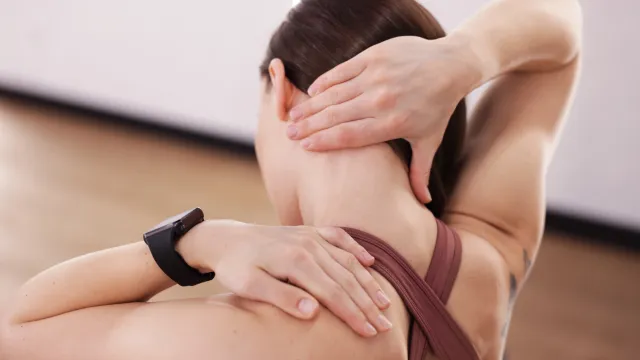
Every modality listed above can be applied in a single session — layered, sequenced, and calibrated to your specific presentation and training schedule. You don't need seven appointments with seven providers. You need one session built precisely around what your body requires that day.
FAQ's
I've had two cortisone injections in my shoulder and the pain keeps coming back. Will acupuncture be different?
Yes — and this is one of the most common presentations we see. Cortisone suppresses inflammation locally and temporarily but addresses none of the underlying circulatory, tissue repair, or muscular imbalance mechanisms driving the condition. When the injection wears off, the same tissue environment generates the same problem. Acupuncture works on those mechanisms directly — which is why patients who have cycled through multiple injections without lasting relief frequently respond strongly to acupuncture.
Can acupuncture help me avoid rotator cuff surgery?
For partial thickness tears and tendinopathies — which represent the majority of rotator cuff injuries — yes. Acupuncture is one of the most effective conservative approaches available and is consistently recommended in clinical guidelines before surgical intervention. If consistent acupuncture produces meaningful improvement in pain and function, surgery may be delayed significantly or avoided entirely. If it doesn't, surgery remains on the table — you've lost nothing by trying.
How long before I can return to overhead training after starting acupuncture for my shoulder?
Timeline depends entirely on the specific injury, its severity, and how your tissue responds. Most patients with rotator cuff tendinopathy return to modified overhead loading within four to six sessions and full overhead training within eight to twelve. Kalpesh gives you a specific return-to-training projection after your first visit assessment — not a generic range.
— KNEE PAIN & IT BAND
Knee Pain & IT Band Syndrome
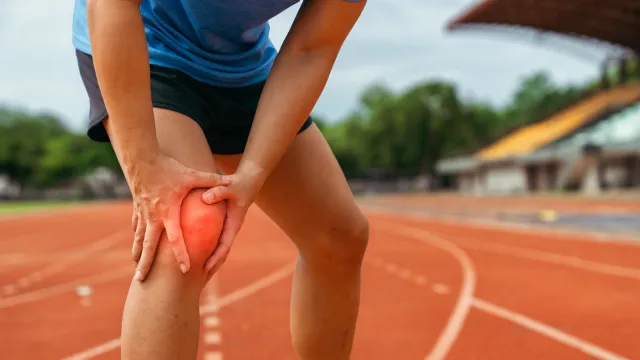
Runners, cyclists, and team sport athletes know IT band syndrome and patellofemoral pain intimately — the lateral knee ache that builds through a run, the anterior knee pain on stairs, the condition that sidelines training cycles and resists every conventional intervention because the tissue generating it is rarely where the problem actually originates.
IT band syndrome is a hip problem expressing itself at the knee. Patellofemoral syndrome is a quadriceps and hip abductor problem expressing itself at the kneecap. Treating the knee in isolation produces temporary results at best. Our approach addresses the full kinetic chain — hip, quad, IT band, and knee — in every session.
Specific presentations:
IT band syndrome — Patellofemoral pain syndrome — Patellar tendinopathy — Medial knee pain — Pes anserine bursitis — Meniscus irritation — Post-ACL reconstruction rehabilitation
For the full knee anatomy breakdown, modality detail, and phases of healing, see our dedicated [Knee & Hip Pain section →] in the Pain hub.
How we treat it:
Acupuncture
Cupping Therapy
Deep Tissue & Sports Massage
Electroacupuncture (E-Stim)
Gua Sha
Herbal Medicine
FAQ's
I've tried foam rolling and stretching my IT band for months. Why isn't it working?
Because the IT band itself is not the problem — and you can't stretch a structure that has almost no elasticity. IT band syndrome is driven by hip abductor weakness and altered biomechanics that shift load onto the lateral knee. Foam rolling provides temporary relief by reducing tone in the TFL and surrounding tissue, but it doesn't address the hip weakness pattern or the fascial restriction in the lateral thigh that perpetuates the condition. Acupuncture and cupping along the full lateral chain — combined with hip activation guidance — addresses the actual mechanism.
My knee MRI shows significant cartilage loss. Can acupuncture still help?
Yes. Structural imaging tells you what the joint looks like — not how much of your pain is driven by the inflammation, muscular guarding, and circulatory stagnation surrounding it. Those are addressable regardless of what the MRI shows. Many patients with severe imaging findings achieve dramatic functional improvement with consistent acupuncture because the pain they're experiencing is driven by modifiable factors, not just the structural changes on the scan.
Can acupuncture help me return to running after a knee injury?
Yes — and return-to-running is one of our most common athletic goals. The protocol addresses both the injured tissue and the biomechanical loading patterns that created the injury — so you return with a knee that's not just less painful but better equipped to handle training load than it was before. Kalpesh works with your specific return-to-running timeline and coordinates treatment intensity around your training progression.
— HAMSTRING & HIP FLEXOR
Hamstring & Hip Flexor Injuries
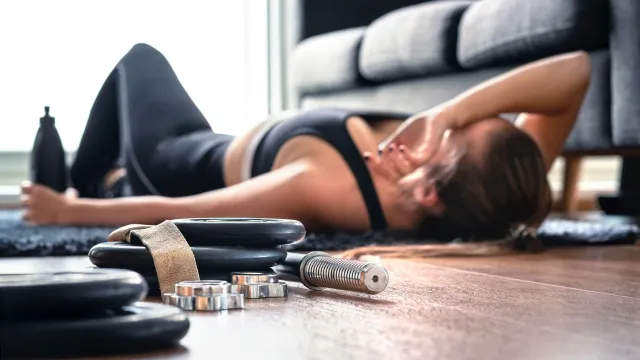
Two of the most commonly strained muscle groups in sport — and two of the most likely to become chronic problems when the underlying tissue environment isn't addressed during recovery. Hamstring strains have a recurrence rate above 30% in athletes who return to sport without fully resolving the repair deficit in the musculotendinous junction. Hip flexor strains in athletes with chronically tight and overloaded iliopsoas create a movement restriction that compounds through every stride, cut, and jump.
What we treat:
Proximal hamstring tendinopathy — Hamstring strains (grade I–II) — High hamstring syndrome — Iliopsoas tendinopathy and strain — Rectus femoris strains — Adductor strains and groin injuries — Hip flexor tightness affecting performance
How we treat it:
Acupuncture
AcuNap
Cupping Therapy
Deep Tissue Massage
Electroacupuncture (E-Stim)
Gua Sha
Herbal Medicine
Tongue diagnosis
FAQ's
I keep re-injuring the same hamstring. Why does it keep happening?
Because the musculotendinous junction — the site of most hamstring strains — never fully remodeled after the original injury. The tissue feels healed and tests well enough to return to training, but the collagen matrix at the injury site is still disorganized and mechanically inferior to healthy tissue. The next sprint or explosive movement finds that weak point again. Electroacupuncture drives the collagen remodeling that closes this gap — turning tissue that feels healed into tissue that actually is.
My hip flexors are chronically tight no matter how much I stretch. What's actually going on?
Chronic hip flexor tightness is almost never a flexibility problem — it's a neural tension and circulatory problem. The iliopsoas is chronically shortened and neurally facilitated, often from prolonged sitting combined with high training load, and stretching provides temporary length without changing the neural drive keeping it short. Acupuncture, cupping, and targeted deep tissue work address both the tissue restriction and the nervous system pattern maintaining it.
How quickly can I return to sprinting after a hamstring strain with acupuncture?
For grade I strains, most athletes return to progressive sprint work within two to three weeks with consistent acupuncture — significantly faster than passive rest alone. Grade II strains typically require four to six weeks. The key distinction is that return with acupuncture reflects genuine tissue repair, not just pain resolution — which is why re-injury rates drop substantially in patients who complete a full treatment course before returning to maximal sprint loads.
— PERFORMANCE OPTIMIZATION
Performance Optimization
Not every athlete who walks through our door is injured. Some of the most consistent users of acupuncture at On Point are athletes who are training well, competing well, and looking for the margin that separates good from exceptional.
The performance application of acupuncture operates on a different logic than injury treatment. The question isn't "what's broken?" — it's "what's the quality of the internal environment your adaptation is happening in?" Sleep quality, nervous system recovery, hormonal regulation, circulatory efficiency, and the speed of inflammatory clearance between sessions all determine whether your training load produces the adaptation you're working toward — or just accumulates as fatigue.
What performance acupuncture addresses:
Recovery speed between training sessions
The primary limit on training volume for most athletes isn't motivation or programming. It's recovery capacity. Acupuncture's ability to downregulate the sympathetic nervous system, clear inflammatory metabolites, and restore parasympathetic tone accelerates the recovery window between sessions — allowing athletes to train with higher frequency and quality.
Sleep quality and HRV
Athletes using regular acupuncture consistently report improved sleep depth and quality — not just duration. Since the majority of physical adaptation and tissue repair happens during sleep, improving sleep architecture is one of the highest-leverage interventions available for performance.
Stress and cortisol regulation
Chronic training stress combined with life stress creates a cortisol load that suppresses testosterone, disrupts sleep, slows recovery, and eventually breaks down tissue faster than training can rebuild it. Acupuncture directly modulates the HPA axis stress response — reducing chronic cortisol burden and restoring the hormonal environment for adaptation.
Nervous system priming pre-competition
A specific acupuncture protocol applied 24–48 hours before competition can optimize autonomic nervous system tone — reducing anticipatory anxiety, improving neuromuscular activation patterns, and creating the internal state most conducive to peak performance. This is the application used in elite sport — and it's available here.
The body doesn't care whether you believe acupuncture works. It responds to the mechanism — the same way a muscle responds to load regardless of whether you understand the physiology of hypertrophy. Results precede understanding. The athletes who benefit most are the ones who start before they're convinced, and let the outcomes do the convincing.
FAQ's
I'm not injured — is acupuncture actually worth it for performance?
Yes — and the athletes who benefit most from acupuncture are often the ones who aren't injured. Recovery speed, sleep quality, nervous system regulation, and the hormonal environment for adaptation all directly determine whether your training produces the gains you're working for. Regular acupuncture improves all four simultaneously. Athletes who add consistent acupuncture to a well-structured training program consistently report faster recovery, better sleep, and improved training quality — particularly during high-volume blocks.
Can acupuncture actually improve HRV and recovery metrics?
Yes. HRV (heart rate variability) is a direct measure of autonomic nervous system balance — the ratio of sympathetic to parasympathetic tone. Acupuncture's parasympathetic activation effect is well-documented and directly improves HRV by shifting the autonomic balance toward recovery mode. Athletes who track HRV consistently report measurable improvements in morning HRV scores following regular acupuncture — particularly after sessions timed to recovery days.
How do I time acupuncture sessions around my training schedule for maximum benefit?
The timing depends on the goal. Recovery-focused sessions are most effective 24–48 hours after your heaviest training day — when the inflammatory response is peaking and nervous system downregulation is most needed. Performance-priming sessions work best 24–48 hours before a competition or key training session. Maintenance sessions fit naturally on lighter training or rest days. Kalpesh builds your session schedule around your training calendar at your first visit.
— IN SEASON MAINTENANCE
In-Season Maintenance
The most underutilized application of acupuncture in athletic populations is also the most strategically obvious: consistent in-season care that keeps the body performing at its ceiling rather than managing the floor.
Most athletes treat acupuncture as a break-glass intervention — something they do when an injury forces them to stop. The athletes who see the most consistent gains treat it as infrastructure — the regular input that keeps inflammation suppressed, tissue supple, the nervous system regulated, and the small dysfunctions from becoming the injuries that cost them weeks.
What in-season maintenance looks like at On Point:
Frequency: Once per week during heavy training or competition season; every two weeks during lower-load periods
Session focus: Rotating between recovery (post-heavy-load clearance), performance priming (pre-competition nervous system optimization), and tissue maintenance (addressing the small accumulations before they become injuries)
Schedule awareness: We adjust treatment intensity and needle stimulus around your competition schedule — nothing that leaves you sore or depleted before a game, race, or event
Cumulative benefit: Unlike most interventions, acupuncture's effects compound with consistent application. Athletes who maintain throughout a season consistently report that their injury rate drops and their recovery speed improves across the season arc — not just session to session

FAQ's
Who is this for?
High school and collegiate athletes in season — Adult recreational athletes with consistent weekly training volume — Masters athletes managing higher recovery demands — Endurance athletes in build or peak training blocks — Team sport athletes managing contact and impact load — Competitive CrossFit and strength athletes
How do I fit acupuncture into an already packed competition schedule?
Most in-season sessions run 45 to 60 minutes and can be scheduled on rest days, light training days, or the day after competition. We avoid heavy stimulation in the 24 hours before competition — sessions that close to game day are calibrated for nervous system priming, not deep tissue work. The schedule is built around your season calendar, not the other way around.
Will acupuncture make me sore or tired before a game?
Not when the session is calibrated correctly. Heavy cupping, aggressive deep tissue work, and high-intensity electroacupuncture can cause temporary muscle soreness — all of which we avoid in the 48 hours before competition. A properly timed pre-competition session uses lighter stimulation focused on nervous system regulation and leaves you feeling clear and activated, not depleted.
Is weekly acupuncture realistic during a heavy season schedule?
For most athletes, yes — and it's the frequency that produces the most meaningful in-season benefit. If weekly isn't feasible, biweekly still produces significant recovery and maintenance outcomes. Even one session per month during a heavy season is meaningfully better than none. We work with whatever frequency your schedule allows and adjust treatment priority accordingly.
— POST SURGICAL RECOVERY
Post-Surgical Athletic Recovery
Surgery creates a specific tissue environment: controlled trauma, post-operative inflammation, scar tissue formation, neural inhibition of the surrounding musculature, and a recovery timeline that is either accelerated or stalled depending on the quality of the healing environment in the weeks and months after.
Acupuncture is one of the most powerful tools available for optimizing that environment — and it is dramatically underused in post-surgical athletic rehabilitation.
What we address post-surgically:
Post-operative inflammation management
The inflammatory cascade following surgery is necessary for initial healing but becomes counterproductive when it persists beyond the acute phase. Acupuncture's anti-inflammatory mechanisms help the body move through the inflammatory phase efficiently without the prolonged swelling and pain that slows functional recovery.
Neural inhibition and muscle activation
Following joint surgery, the surrounding musculature is neurally inhibited — the nervous system effectively "turns off" the muscles around the surgical site as a protective response. This inhibition persists long after the tissue has healed and is one of the primary reasons post-surgical rehabilitation is slow.
Scar tissue management
Surgical scar tissue and internal adhesion formation restrict tissue glide and limit functional range of motion. Gua sha and acupuncture applied progressively through the post-surgical healing phases breaks up early adhesion formation and guides collagen remodeling toward functional tissue rather than restrictive scar.
Pain management and opioid reduction
Acupuncture's endorphin-mediated pain relief is well-documented and provides a non-pharmaceutical option for post-surgical pain management that supports faster cognitive recovery and reduces opioid dependency risk.
Surgeries we commonly support:
ACL reconstruction — Meniscus repair — Rotator cuff repair — SLAP repair — Hip labrum repair — Total knee replacement — Total hip replacement — Ankle reconstruction — Spinal decompression and fusion
*We typically begin acupuncture support at four to six weeks post-surgery pending surgical clearance, and integrate directly with your physical therapy timeline.
FAQ's
My surgeon cleared me for acupuncture. When exactly should I start?
As soon as you have surgical clearance — typically four to six weeks post-op depending on the procedure. The early post-surgical window is where acupuncture's anti-inflammatory and neural activation effects are most impactful. Starting at clearance rather than waiting until PT has plateaued gives you the full benefit of both approaches working simultaneously from the beginning of your recovery arc.
Can acupuncture help with the pain and swelling after surgery without interfering with my pain medication?
Yes. Acupuncture works through endorphin-mediated and anti-inflammatory mechanisms that are entirely distinct from pharmaceutical pain management. There is no contraindication with standard post-surgical pain medications. Many patients find acupuncture reduces their reliance on opioid pain medication in the early post-surgical period — which supports faster cognitive recovery and reduces dependency risk. Any medication changes remain your surgeon's decision.
My PT says I've plateaued six months after ACL surgery. Can acupuncture still help?
Yes — and post-surgical plateaus are one of our most common presentations. Plateaus in PT typically reflect neural inhibition of the surrounding musculature, residual scar tissue restriction, and the inflammatory state that never fully resolved — not a ceiling on your recovery potential. Acupuncture addresses all three directly. Patients who have been "stuck" for months post-surgically regularly experience renewed progress once acupuncture is added to their rehabilitation protocol.

2500+
Patients Helped Over The Years

15+
Years of Hands On Experience

100+
5 Stars Google Reviews
FOLLOW US


LINKS
CONTACT US
PHONE: (972) 863-2895
EMAIL: info@opawellness.com
WE ACCEPT INSURANCE
Copyright 2026. On Point Acupuncture & Wellness.
All Rights Reserved.